Revelation of the Durbeyfield family's ancestry
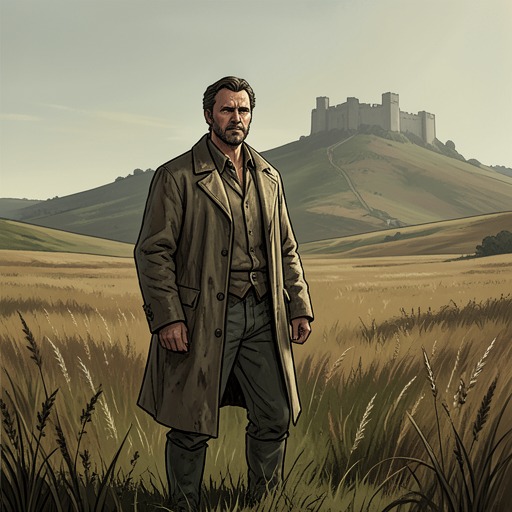
Tess of the d'UrbervillesThe revelation of the Durbeyfield family’s ancestry begins when Parson Tringham tells John Durbeyfield that he is the lineal representative of the ancient, knightly d’Urberville family. The discovery briefly recasts a poor country laborer as the heir to a celebrated lineage, but offers no land, income, or route back to social standing. Its most consequential effect is not restoration but expectation: the family invests the old name with hopes that the present circumstances cannot sustain.
Discovery and Genealogy
Parson Tringham explains that he uncovered the connection while researching pedigrees for a new county history. His inquiry began after he noticed Durbeyfield’s name on his wagon; tracing the man’s father and grandfather left him, he says, in no doubt. The knowledge had otherwise almost disappeared, and Tringham admits that he initially considered it too useless to disturb Durbeyfield with.
The family history Tringham recounts reaches back to Sir Pagan d’Urberville, said to have come from Normandy with William the Conqueror. He describes Durbeyfield’s ancestors as landholders whose branches held manors across the region, records in the Pipe Rolls, and a forefather summoned to Westminster in the reign of Edward II. The family later received the title Knights of the Royal Oak for its loyalty under Charles II. Tringham also reads the lineage in Durbeyfield’s nose and chin, though he calls the features debased: physical resemblance becomes a visible but diminished remnant of a history that has no present force.
A Name Without Restoration
Durbeyfield responds to the news by measuring it against his life as a haggler who has been “knocking about, year after year, from pillar to post.” He recalls family stories that they had once “seen better days,” along with an old silver spoon and engraved seal, but had understood these as traces of modest former comfort rather than proof of noble descent. The discovery suddenly joins those household relics to a much grander past, without changing the conditions in which the family lives.
When Durbeyfield asks what he should do, Tringham advises him only to reflect on “how are the mighty fallen.” To the antiquary, the ancestry is a matter of local historical and genealogical interest, not a practical claim or promise. Durbeyfield nevertheless asks whether the family will ever come into its own again; Tringham cannot say. The exchange establishes the gap at the heart of the revelation: its history is elaborate, but its future remains entirely uncertain.
Family Expectations and Consequences
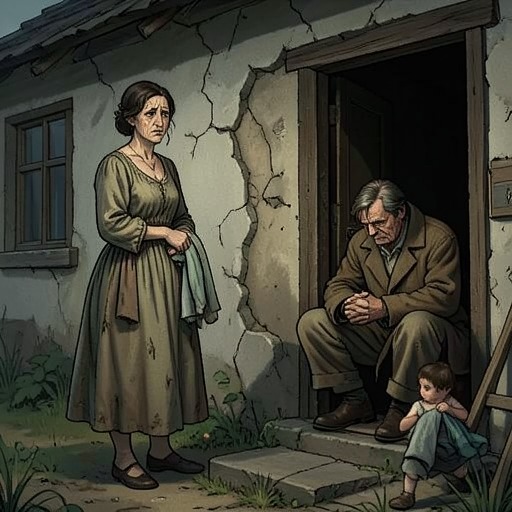
The news reaches Durbeyfield’s household as a story of revived rank. Joan Durbeyfield tells Tess that the family has been found to be among the county’s greatest gentlefolk, with monuments, vaults, crests, and escutcheons, and says that John’s undignified ride home had been caused by excitement over the discovery rather than drink. She imagines that people of their rank may soon arrive in carriages and that great things may come of the family connection. The ancestral name thus becomes a source of anticipation before it has produced any material benefit.
That expectation later shapes Joan’s reproach when Tess returns home after her time at Trantridge. Joan regrets that Tess has not married Alec d’Urberville and asks why she did not do something for the family instead of thinking only of herself. She had interpreted the help Alec gave the household as evidence of kinship, and then as a consequence of love; marriage, she thinks, might have turned that attention into a lasting advantage. Tess answers that she was a child when she left home and accuses her mother of failing to warn her of the danger posed by men. The scene exposes how the family’s hopes of social advancement can make Tess’s vulnerability look, to her mother, like a missed opportunity.
Significance in the Novel
The discovery supplies the Durbeyfields with aristocratic ancestry but no protection from poverty. At Flintcomb-Ash, Tess works in a harsh agricultural setting that the narrative identifies as a village neglected by both its own inhabitants and its absentee lord; the old family distinction has not lifted her out of labor or hardship. The contrast between a remembered lineage of manors and a present life of precarious work makes ancestry an inheritance of name and expectation rather than security.
The revelation also sharpens the novel’s criticism of social judgment. When Tess later tells Angel Clare about her past, he concedes that she was more sinned against than sinning, but says that forgiveness is not all. His response gives moral consequence to the same imbalance already visible in Joan’s hopes: Tess bears the consequences of circumstances she did not understand, while the family’s imagined status offers no means of changing them. The ancestral discovery therefore matters less as a solution to the Durbeyfields’ troubles than as an irony that links inherited prestige, unmet hopes, and the unequal burdens imposed on Tess.